A literary barcelona guide for the solo luxury traveler
Barcelona is a literary city where streets, cafes and libraries feel like pages waiting to be read. For a solo traveler booking a premium hotel, this literary Barcelona guide becomes a way to navigate the city through books, writers and quiet corners rather than queues. You move between marble tables, hotel libraries and shaded plazas, letting the city Barcelona offers speak in its own measured voice.
The official Barcelona Literary Map, created by the Ajuntament de Barcelona, is the most useful starting tool for any book lover. It charts more than one hundred writers with strong links to the city, over forty public library locations and around eighty bookstores, turning literary history into a walkable atlas. As the Barcelona City Council explains in its own words, “What is the Barcelona Literary Map? A tool locating writers, literary works and spaces across Barcelona”.
This map underpins any serious literary guide because it connects fiction to real addresses and real hotel districts. You can pick up the printed guide at any city library, then layer it over your own plans for visiting Barcelona in style. Used well, it transforms a simple literary tour into a curated itinerary that balances culture, comfort and time for long, unhurried reads.
Barcelona’s status as a UNESCO City of Literature is not a marketing slogan but a recognition of a rich literary ecosystem. The designation reflects the depth of Catalan literature, the presence of Latin American voices in exile and translation, and the way authors inspired by the city have shaped global literature. For travelers arriving from the United States or other countries, this context matters because it frames every cafe, bookstore and hotel library as part of a living cultural network rather than a backdrop.
Think of this literary Barcelona guide as a companion to your booking engine rather than a separate cultural tour. When you compare reviews of luxury properties, you can now weigh proximity to a historic library or a beloved bookstore alongside spa menus and rooftop pools. That is how a rich literary city quietly reshapes what a premium stay in Barcelona should mean for a reader.
Walking the novels: gothic quarter, El Raval and civil war echoes
The Gothic Quarter is where any serious literary tour of Barcelona should begin, especially for a solo traveler who prefers to walk without a flag waving ahead. Narrow streets around Plaça del Rei and Carrer del Bisbe hold centuries of history, and many authors inspired by this city have used these stones as their stage. When you read a book set in the old town, then trace its route at your own pace, the city Barcelona presents feels layered and intimate.
George Orwell and Ernest Hemingway, often paired together in literary shorthand as orwell hemingway, both wrote about Barcelona during the civil war. Their accounts of militias, barricades and smoky bars still haunt corners of the Gothic Quarter and nearby El Raval, where working class life once pressed hard against the port. A thoughtful literary guide will point you toward streets mentioned in their books without turning the experience into a reenactment, letting you pause where the past feels closest.
El Raval, just across La Rambla, adds another chapter to any barcelona literary walk. Here, the mix of immigrant communities, small cafes and independent bookstores reflects a city that keeps rewriting itself. For a book lover, this is where Latin American literature, Catalan literature and English language shelves often share the same cramped space, inviting you to read across borders.
One address that appears in many literary histories is Bar Marsella, a long standing absinthe bar in El Raval. It is often linked to orwell hemingway anecdotes, though the reality is more complex than the legends repeated in casual reviews. Whether or not your favorite authors actually drank here, the room’s stained mirrors and high ceilings make it a compelling stop on a self guided literary tour between hotel and harbor.
To deepen this walk, combine the Literary Map with museum visits that explore the civil war and the city’s cultural memory. Exhibitions at institutions such as the Museu d’Història de Barcelona or the Museu Nacional d’Art de Catalunya often illuminate the same streets you are crossing, connecting paintings, photographs and documents to the neighborhoods outside. In this way, the literary history of Barcelona becomes not just something you study but a texture you move through between check in and late night vermut.
Bookstores, Sant Jordi and the ritual of buying books in barcelona
For many travelers, the first real contact with a literary city comes not from a monument but from a bookstore doorway. Barcelona excels here, with dozens of bookshops highlighted on the Literary Map and many more tucked into side streets that never appear in tourist brochures. If you are a book lover, this is where a literary Barcelona guide stops being abstract and starts shaping how you spend your time and money.
Historic shops around the Gothic Quarter and Eixample often carry strong sections on Catalan literature, Spanish classics and translated Latin American novels. Names like La Central, Documenta or the venerable Llibreria Catalònia (in its various incarnations) signal deep local catalogues. Staff in these bookstores usually read widely and can guide you toward authors inspired by Barcelona, whether you want crime fiction set in El Raval or essays on the city’s architecture. When reviews mention that a shop has a good English language section, they often understate the pleasure of finding a familiar spine beside a local favorite.
The spring festival of Sant Jordi, when streets fill with stalls selling books and roses, is the most famous expression of this culture. Even if you are visiting Barcelona in autumn, understanding this ritual helps you read the city’s relationship with books more clearly. Many stores keep a small display related to Sant Jordi or to the Dia del Llibre, reminding you that buying a book here is part of a civic tradition, not just a private habit.
Look for names like Casa del Llibre on Passeig de Gràcia, where international titles sit alongside works by local authors and writers from across the United States and Latin America. Smaller independents in Gràcia or Poblenou may not appear in every literary guide, but they often host readings that blend Catalan literature with visiting voices from the United States or the United Kingdom. In both cases, the act of choosing a book becomes a way of joining Barcelona’s ongoing conversation about literature and identity.
Between shop visits, you can thread in cultural stops that speak to the same themes of memory and storytelling. Guides to the museums Barcelona hotel guests walk past every day often highlight lesser known institutions where art, photography and history intersect with the city’s literary past. Plan a slow day that moves from a bookstore to a small museum, then back to your hotel with a new book in hand and the city’s stories still echoing in your head.
Cafes as writing rooms and reading salons
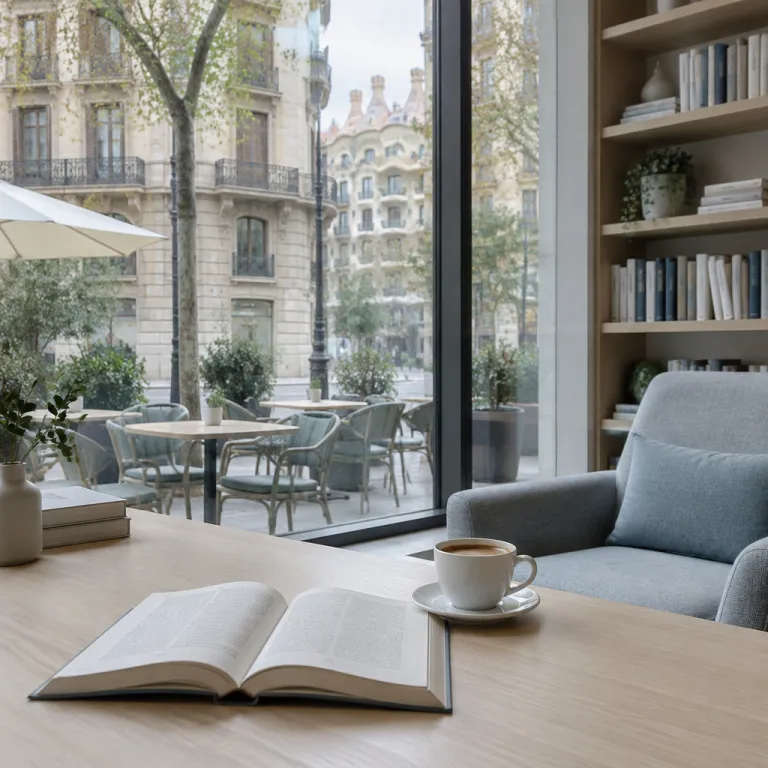
The cafe is where Barcelona’s literary life becomes visible, especially for solo travelers who enjoy watching a city think. Long before laptops and flat whites, writers used marble tables and strong coffee as their office, and some of those rooms still function as informal libraries. A refined literary Barcelona guide will steer you toward cafes where lingering with a book feels natural rather than staged for social media.
In the Gothic Quarter and around Plaça Reial, older establishments still carry the patina of smoke and conversation, even if the clientele has shifted. Sit with a novel or a slim volume of poems, and you will notice how the city’s rhythm slows inside, allowing you to read deeply while the outside streets stay busy. For many visitors from the United States, this unhurried cafe culture is one of the great luxuries of visiting Barcelona, more memorable than any tasting menu.
El Raval’s cafes, including those near Bar Marsella, offer a different energy that suits readers who like a little noise with their pages. Here, students, artists and night workers share tables, and the line between writing, reading and talking blurs in a way that feels true to the neighborhood’s literary history. A thoughtful guide will mention which spots welcome long stays with a single cortado and which expect a faster turnover, so you can choose your reading room accordingly.
Beyond the historic center, neighborhoods like Gràcia and Sant Antoni have developed their own cafe cultures that appeal to contemporary writers and readers. You might find a small library shelf in the corner, stocked with donated books in Catalan, Spanish and English, inviting you to swap what you have finished for something unexpected. These informal libraries complement the city’s forty public library branches, reminding you that Barcelona treats reading as a public good as much as a private pleasure.
When planning your days, think of cafes as essential infrastructure for a literary tour rather than incidental stops between museums. Choose a table with good light, order something simple and let an hour stretch into two while you read and watch the city barcelona unfold outside. In a culture that values conversation and contemplation, no one will rush you, and that sense of time is perhaps the most precious amenity a reader can book.
Hotel libraries, quiet rooms and building a slow literary day
Luxury hotels in Barcelona increasingly understand that some guests measure comfort not only in thread counts but in the quality of their reading time. For a solo traveler following a literary guide, a property with a thoughtful library, quiet lounges and good light can be as important as a rooftop pool. When you read reviews, look for mentions of real shelves, curated selections and spaces where you can sit undisturbed with a book for an afternoon.
Some premium addresses near Passeig de Gràcia and in Eixample have invested in small but serious libraries, often mixing design monographs with novels set in the city. These collections may include works of Catalan literature, translations of Latin American classics and essays on Barcelona’s history, giving you a way to deepen your understanding without leaving the building. A stay in such a hotel turns rainy mornings or late nights into opportunities to read about the city while it hums quietly outside your window.
When choosing where to stay, consider how the location supports a slow, literary day built around walking, reading and eating well. A central property that balances refined comfort with easy access to libraries, bookstores and cafes, such as the Guillermo Tell Barcelona hotel described in this premium stay in the heart of the city guide, can anchor your entire itinerary. From there, you can step out for a morning literary tour, return for a siesta with your new book, then head back into the streets for an evening cafe session.
A perfect literary day in Barcelona might begin with an early walk through the Gothic Quarter before the crowds arrive. You could then visit a nearby library or bookstore, perhaps one associated with the Dia del Llibre tradition, and choose a novel by one of the many authors inspired by the city’s streets. After a long lunch in a quiet restaurant, the afternoon becomes reading time on your hotel terrace or in a lounge, letting the city’s sounds filter in as background music.
As night falls, you might return to a cafe or even to Bar Marsella for a final drink, carrying with you the pages you have read and the places you have walked. Over several days, this rhythm turns visiting Barcelona into something more than sightseeing, aligning your internal pace with the city’s rich literary heartbeat. For readers who travel alone, it is a way of feeling both independent and deeply connected, guided not by a schedule but by the books in your bag.
Using the barcelona literary map as your private concierge
The Barcelona Literary Map functions like a discreet concierge for readers, one that cares more about your next chapter than your next reservation. Produced by the city’s cultural institutions, it highlights writers, libraries, bookstores, cafes and even historic hotels, all linked to the city’s literary history. For a traveler who values independence, this map turns the entire city into an open air library where every walk can become a literary tour.
You can collect the printed version at any of the forty public library branches, many of which are worth a visit in their own right. These libraries often occupy striking buildings, from converted factories to modern glass structures, and they anchor neighborhoods where everyday life continues far from the main tourist routes. Spending time in such a library offers a different perspective on Barcelona than any monument, showing you how literature functions as a daily necessity rather than a special event.
The map’s latest edition expands beyond traditional novels to include comics, children’s literature and young adult titles, reflecting a broader understanding of what a rich literary culture looks like. This inclusiveness matters for travelers from the United States and other countries who may arrive with a narrow list of famous names and leave with a more diverse reading list. By following the map’s suggestions, you encounter not only canonical authors but also contemporary voices who are reshaping how the city is written today.
Used alongside a well chosen hotel and a flexible schedule, the Barcelona Literary Map helps you design days that feel both structured and open. You might mark three or four points of interest — a library, a bookstore, a cafe and a square mentioned in a favorite book — then let the streets between them provide their own surprises. Over time, this practice turns your stay into a personal literary barcelona, a narrative that belongs as much to your footsteps as to the authors who came before.
For readers who travel alone, this approach offers something that standard guided tours rarely provide. It respects your pace, your preferences and your need for quiet, while still connecting you to the city’s collective memory and its ongoing conversation about books. In a place where literature, architecture and everyday life are so tightly woven, a carefully used literary guide becomes less a checklist and more a way of belonging.
FAQ
What is the Barcelona Literary Map and where can I get it ?
The Barcelona Literary Map is an official tool that locates writers, literary works and related spaces such as libraries, bookstores, cafes and hotels across the city. It is produced by the Barcelona City Council and its cultural partners to promote literary tourism and public access to reading spaces. You can pick up a free printed copy at any of the city’s public libraries or at tourist and culture offices, and the latest edition is also available through the Ajuntament de Barcelona’s digital resources.
Is Barcelona really a major literary city or just a tourist slogan ?
Barcelona has been designated a UNESCO City of Literature, which recognizes its strong network of writers, publishers, libraries and bookstores. The city supports more than one hundred writers with documented links to its neighborhoods, along with dozens of public libraries and many independent bookshops. For visitors, this means that literary experiences are easy to integrate into a trip, from walks in the Gothic Quarter to evenings in historic cafes.
How can I plan a literary day in Barcelona without joining a group tour ?
You can design your own route by combining the Barcelona Literary Map with a good city map and your hotel’s location. Choose a few key stops such as a library, a bookstore, a cafe and a historic square, then walk between them at your own pace. This approach lets you enjoy the city’s literary history while keeping the flexibility and privacy that many solo travelers prefer.
Do luxury hotels in Barcelona really offer useful spaces for readers ?
Many higher end properties in central neighborhoods now include quiet lounges, small libraries or well designed rooms that are comfortable for extended reading. When you check reviews, look for mentions of real book collections, calm common areas and good natural light. Choosing a hotel with these features can significantly enhance a literary focused stay, especially if you plan to spend afternoons reading rather than sightseeing nonstop.
Are there specific cafes or bars linked to famous writers in Barcelona ?
Several cafes and bars in the Gothic Quarter and El Raval are associated with writers who lived in or wrote about Barcelona, including figures connected to the civil war period. Bar Marsella in El Raval is one of the most cited examples, often linked to stories about George Orwell and Ernest Hemingway. While some legends are exaggerated, these venues still offer an atmosphere that many readers and writers find inspiring.